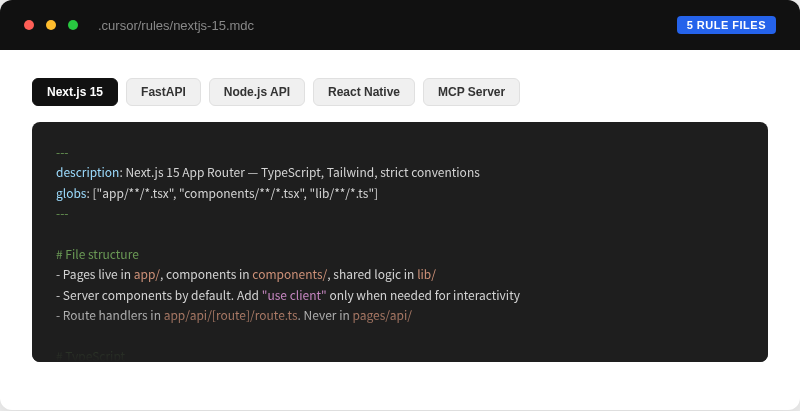
A look inside the Next.js 15 rule file — 5 stacks total
Five .mdc rule files: Next.js 15 App Router, FastAPI + Pydantic v2, Node.js API, React Native, and MCP servers. Drop one in and Cursor stops writing the wrong patterns for your stack.
→ Refund if it's not what you expected. No time limit, no questions
→ Use code LAUNCH for 20% off. First 25 buyers · expires ...
A look inside the Next.js 15 rule file — 5 stacks total
Covers App Router structure, Server Components vs. Client Components, data fetching patterns, and Zod validation for API routes. Stops the AI from generating pages/ directory code in an App Router project.
Pydantic v2 models, async route patterns, dependency injection with Depends, and consistent error handling shapes. The AI stops generating Pydantic v1 syntax and sync routes in async codebases.
Controller/service separation, async error middleware, JWT auth patterns, and standardized response shapes. Prevents the AI from writing inline business logic in route handlers.
Expo Router file conventions, StyleSheet usage over inline styles, Zustand for local state, TanStack Query for server state, and FlatList performance patterns. Stops the AI from generating bare React Native code that ignores Expo abstractions.
Tool vs. resource decisions, the isError pattern for returning errors without crashing the client session, path sandboxing for file access, and Claude Desktop config format. The rule every MCP developer wishes they'd had on day one.
mkdir -p .cursor/rules
cp nextjs-typescript.mdc .cursor/rules/
# Done. Open Cursor and start a chat.
That's the entire setup. The .cursor/rules/ directory is where Cursor looks for project-level rules. Drop the file in and it's active.